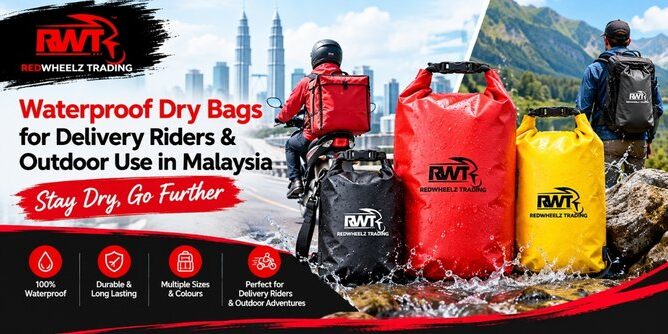
Malaysia’s tropical downpours don’t wait for a convenient time. For delivery riders, hikers, and anyone commuting by motorcycle, a proper waterproof dry bag is the difference between gear that survives a sudden storm and gear — or deliveries — that don’t. This guide breaks down how dry bags work and how to choose one.
Dry Bag vs Regular Waterproof-Coated Bag: What’s Actually Different
A “water-resistant” or waterproof-coated bag sheds light rain but usually has zippers, seams, or a top flap that lets water in during sustained heavy rain or full submersion. A true dry bag uses a roll-top closure (rolled down and clipped at least 2–3 times) that creates a genuinely sealed, air-and-water-tight enclosure — no zippers, no stitched seams exposed to water. This matters directly in Malaysia’s monsoon conditions and sudden afternoon thunderstorms, where a “water-resistant” bag simply isn’t enough for a long ride.
Who Actually Needs Waterproof Dry Bags in Malaysia
- Food & parcel delivery riders — protecting orders (and phones, wallets, documents) during sudden rain on the road, complementing gear covered in our delivery rider gear guide.
- Daily motorcycle commuters — keeping laptops, documents, and a change of clothes dry.
- Hikers and campers — protecting electronics and dry clothing during jungle trekking, especially relevant in Malaysia’s humid, rain-prone trails.
- Watersports and boat users — kayaking, fishing, island-hopping trips where full submersion is a real risk, not just rain.
Choosing the Right Litre Size
| Use Case | Recommended Size |
| Phone, wallet, small documents only | 2–5L |
| Daily commute (change of clothes, small laptop) | 10–15L |
| Delivery rider top-box liner or backpack insert | 15–25L |
| Overnight hiking/camping gear | 25–35L |
| Multi-day trekking or watersports gear | 35L+ |
For delivery use specifically, a dry bag is often used as a liner inside an existing delivery box or backpack rather than as a standalone bag — check compatibility with your current setup, whether that’s a thermal delivery bag or a rider’s own backpack.
Understanding Waterproof Ratings (IPX)
Dry bags are sometimes rated using the IPX scale, similar to electronics:
- IPX4–IPX5: Splash and rain resistant — fine for light rain exposure.
- IPX6: Resistant to strong jets of water — solid choice for riding in heavy rain.
- IPX7–IPX8: Fully submersible for a period of time — best for watersports or river crossings during hiking.
For most riders and commuters in Malaysia, an IPX6-rated roll-top dry bag covers realistic real-world conditions without paying a premium for full-submersion specs you won’t need.
Material Considerations
- PVC-coated fabric — most common, fully waterproof, budget-friendly, slightly heavier.
- TPU-coated nylon — lighter, more flexible in cold weather (less relevant in Malaysia’s climate), often pricier.
- Welded seams (not stitched) are essential — stitched seams, even with tape over them, are the most common failure point in cheaper dry bags.
How to Actually Use a Dry Bag Correctly
Even a genuine dry bag fails if used incorrectly:
- Don’t overfill — leave enough slack material at the top to roll down at least 3 full folds.
- Squeeze out excess air before sealing (this also improves the seal).
- Clip the roll-top buckle fully — a half-clipped buckle defeats the seal.
- Check the seams periodically for wear, especially on bags used daily for delivery work.
Pairing with Existing Rain Gear
A dry bag protects cargo, but riders still need to stay dry themselves — pair it with proper motorcycle rain gear for full protection during Malaysia’s sudden downpours.
Red Wheels Trading supplies dry bags and waterproof delivery accessories suited to Malaysian riders, delivery fleets, and outdoor use. Contact us to find the right size and rating for your use case.
FAQs
Q: What is the difference between a dry bag and a waterproof bag?
A: A waterproof-coated bag resists light rain but often has zippers or seams that let water in during heavy or sustained rain. A true dry bag uses a rolled and clipped top closure with no exposed zippers, making it fully sealed against water.
Q: What size dry bag do delivery riders need in Malaysia?
A: Most delivery riders do well with a 15–25 litre dry bag, either as a standalone bag or as a liner inside an existing delivery box or backpack.
Q: What waterproof rating should I look for in a dry bag?
A: For everyday riding and commuting in Malaysia’s rain, an IPX6 rating (resistant to strong water jets) is generally sufficient. Full submersion ratings like IPX7–IPX8 are only necessary for watersports or river crossings.
Q: Can a dry bag fully protect electronics in heavy rain?
A: Yes, provided the bag is properly sealed — filled without overstuffing, air squeezed out, and the roll-top rolled down at least three times before clipping.
Q: What material is best for a dry bag in Malaysia’s climate?
A: PVC-coated fabric is the most common and cost-effective choice and performs well in Malaysia’s tropical climate. TPU-coated nylon is lighter but typically more expensive, with the weight advantage mattering less in hot, humid conditions.