A thermal delivery bag works hard, dozens of hot and cold orders a day, spills, grease, rain, and constant loading and unloading. But the same bag that keeps food safe and fresh only does its job properly if it’s kept clean and well maintained. A neglected bag doesn’t just look bad; a soiled liner can affect food hygiene, and a damaged shell or seam lets heat and cold escape faster, meaning the food inside cools down or warms up before it reaches the customer.
This guide covers how to clean thermal delivery bag, whether you’re a delivery rider maintaining your own gear or a business managing a fleet of bags for your riders.
What’s Actually Inside a Thermal Delivery Bag
Understanding the materials helps explain why certain cleaning methods work and others don’t. Quality thermal delivery bags, including those made by RWT, typically combine a few different food-grade materials: PEVA (Polyethylene Vinyl Acetate) liners, which are lightweight, food-safe, and moisture-resistant; PU (polyurethane) coating for insulation that’s also non-toxic and resistant to bacteria; durable nylon or polyester outer shells; and in some designs, aluminum foil liners that help retain temperature. Each of these materials has a different tolerance for heat, moisture, and detergents, which is why care instructions matter more for a delivery bag than for an ordinary backpack.
Daily Cleaning (Do This Every Shift)
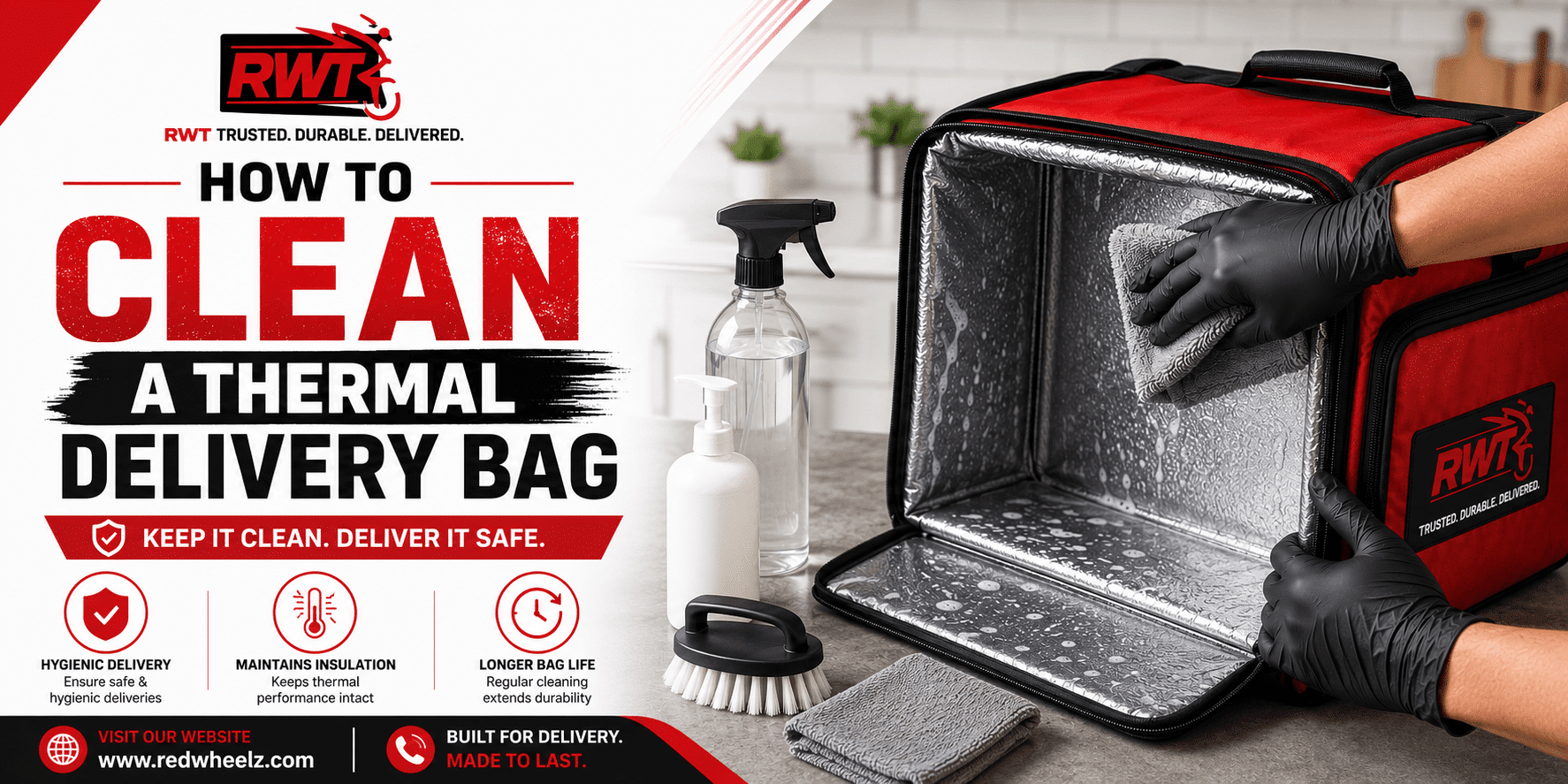
- Wipe down the interior liner with a damp cloth after your shift, especially if there were any spills, the smooth, waterproof PEVA liner is designed to be easy to wipe clean
- Check for food debris, crumbs, or grease in the corners and along the zipper
- Air out the bag with the zip open for a few minutes before closing it up for storage, trapping moisture inside encourages odour and mould growth
- Wipe the exterior if it’s picked up dirt, oil, or road grime during deliveries
Weekly Deep Clean Thermal Delivery Bag
Once a week (more often for high-volume riders), give the bag a proper clean:

- Hand wash the interior and exterior using a mild soap or detergent diluted in lukewarm water, avoid hot water, which can weaken the PU coating and adhesive seams over time
- Use a soft cloth or sponge, not an abrasive scrubber, which can scratch or degrade the liner’s protective coating
- Rinse thoroughly to remove all soap residue, then wipe dry with a clean towel
- Leave the bag open to air dry completely in a shaded, well-ventilated area before packing it away or using it again, direct, prolonged sunlight can degrade the outer fabric and print over time
What to Avoid
- Do not machine wash or tumble dry a thermal delivery bag, the agitation and heat can delaminate the insulation layer and warp the bag’s structure
- Do not use bleach or harsh chemical cleaners, which can break down the food-grade liner materials
- Do not store the bag while still damp, this is the most common cause of mould and lingering odour
- Do not leave the bag closed up in direct sun or in a hot vehicle for extended periods when not in use, as heat accelerates wear on the PU coating and seams
Maintaining Zippers, Straps, and Structure
Zippers and velcro closures see constant use and are usually the first component to fail on a delivery bag. Keep zipper tracks free of food debris and grit, which cause sticking and eventual breakage. Check straps and stitching regularly, especially on bags used for heavier catering or bulk orders, and address small tears or loose seams before they become bigger problems, a small liner puncture, for instance, can be flagged for repair or replacement before it compromises insulation or hygiene.
When to Replace, Not Repair
A well-maintained thermal bag can last through heavy daily use for a meaningful stretch of time, but insulation performance degrades with age even with good care. If a bag no longer holds temperature as well as it used to, has a punctured or peeling liner that can’t be reliably cleaned, or has structural damage to the frame or straps, it’s time to retire it, especially for food delivery use, where hygiene and temperature control directly affect customer experience and safety.
For Businesses Managing a Rider Fleet
If you’re managing delivery bags across a team of riders, a restaurant, cloud kitchen, or logistics operation, build bag care into your onboarding and standard operating procedures rather than leaving it to individual habits. A simple weekly checklist (wipe, wash, dry, inspect) extends the working life of your bags and protects food safety standards across the whole fleet. RWT supplies food-grade, certified thermal and non-thermal delivery bags built for exactly this kind of daily commercial use, and can advise on the right bag specification for your order volume and delivery type.
Frequently Asked Questions
Can I machine wash to clean thermal delivery bag?
No. Machine washing and tumble drying can delaminate the insulation layer and warp the bag’s structure. Hand wash with mild soap and lukewarm water, then air dry.
How often should I clean thermal delivery bag?
Wipe down the liner after every shift, and do a full hand wash at least once a week, more often for high-volume riders or if the bag has had spills.
What should I do if the bag’s liner is torn or punctured?
A punctured liner should be flagged for repair or replacement, since it compromises both insulation performance and hygiene. Don’t continue using a bag with a damaged liner for food deliveries.
Why does my delivery bag smell even after cleaning?
Lingering odour is usually caused by storing the bag while still damp, or from grease and food residue trapped in seams. Make sure the bag is fully air-dried before closing it up, and check corners and zipper tracks during cleaning.
Conclusion
A thermal delivery bag is a working tool, and like any tool, it performs better and lasts longer with routine care. A simple daily wipe-down and weekly hand wash, avoiding machine washing, bleach, and prolonged heat exposure, keeps the PEVA liner, PU insulation, and outer shell in good condition for the long run. For businesses supplying bags to a rider team, building this into a standard routine protects both your equipment investment and your customers’ food safety.